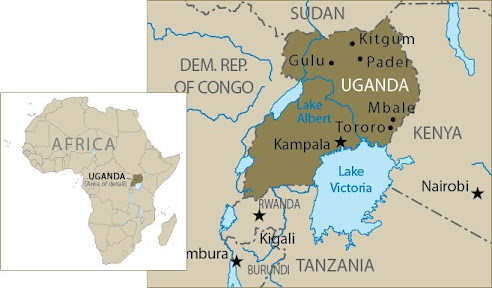
Map of Uganda

Map of Uganda
The Uganda Kampala Mission includes Uganda, Ethiopia, Rwanda, Burundi and Southern Sudan. Our assignment covers all the areas except Ethiopia.

Monday, September 28, 2009

In Memoriam...Theresa Nandi Busulwa 1998-2009


The Death of a child in Uganda...

A phone call at 2:00 A.M brought stark African reality..."My beautiful, healthy daughter is dead..." We will never forget the pain and anguish in our friend Ssimbwa’s voice. His 11 year old daughter, “Teddy” had been in the hospital for three days being treated for an asthma attack. That day she had been improving; only being put on the nebulizer every six hours...now she was gone. It was a great sorrow, not managed by a few words or kind acts. What could we do?..."some few things...100 lbs of maize flour, beans, rice, sugar"- things to feed the gathering friends and family... visit the family...hug...shake hands... express sorrow and watch the surge of church members, family and friends swell ...everyone understanding (25% of African children die before the age of five). As we left, those who had gathered began to sing hymns and talk in hushed tones. They stayed all night with the family.

Ssimbwa called early and said..."Sister, will you bring some small wreath to put on my little girl’s grave?". When we arrived we had bottled water for about 500 people, and Eddie in the truck...he could speak to the two Grandmothers with us during the two hour ride to the village.


Rains have come to Uganda...it is so green and gardens are growing at an incredible rate...The drive to his village was one of the most beautiful areas in Uganda. In the family compound there were about 200 chairs set up under shade; not nearly enough for those who would to come. Teddy was taken into the house by her father and other family members. The simple wooden coffin was placed on the floor and surrounded by sitting mats. The women sat and cried and wailed their grief. Expressing sorrow here is done openly and without restraint.


Teddy's sisters.


Following the service the congregation moved, singing, to the small grave among the ancestors who went before her. Also there, were the graves of the family's two other children who preceded her.

...this is life and passing in Africa.

Sunday, September 13, 2009

Rioting in Uganda


There has been widespread civil unrest for the last two days in Kampala and the surrounding towns. Supporters of the Buganda Kingdom Kabaka (King) have been battling police and army troops in protest against the government. The trouble started over the Kabaka being denied access to a youth rally in the town of Kayunga, north of Kampala. As a result, frustration with the government has flowed into the streets of Kampala. We were going to the Branch in Mengo this morning but ran into an onslaught of people running in the other direction with their hands in the air and boda-bodas motioning for us to go the other way. There was a smoke cloud and tear gas in the street ahead so we returned home. All missionaries have been told to stay inside the last two days but it appeared this morning that the protests were over; obviously they aren't. So, we are back inside doing paperwork.

We are in no danger in our compound because the riots are in the center of the city where roads in and out of Kampala have been blocked by fires and demonstrators. We are hopeful that the situation resolves quickly as we just started our new natural spring protection project this week. It will provide clean water to 70,000 people. In addition, a shipment of our wheelchairs is at the Kenyan border waiting to come into Kampala where they will be flown by the UN from Entebbe to Sudan.

Saturday, September 5, 2009

Latest Refugee News


This is an article from the September 2009 Ensign Magazine which we wrote about the missionaries helping us put together emergency kits with some of the supplies from the refugee camp project. We think it is definitely Pulitzer Prize winning material. Obviously, we did not put our names in the article due to our extreme humility... or else the editor took it out....I can't remember which. Because of cholera outbreaks in the camps at Nakivale and Kanungu, families with small children sometimes bypassed the camps and came to Kampala seeking help. The kits would provide them short term assistance until they could be relocated. It would also provide an emergency back-up supply for the Minister of State over Refugees.

We thought that putting these kits together would be an all day task. We obviously underestimated the Elder and Sister Missionaries. They had all the kits assembled and boxed in less than an hour and had a great time doing it.

We were really impressed by how they all worked together. We told them what needed to be done and just stood back and watched. They organized themselves into groups with different tasks and started.


There were a lot of good natured jokes about, "How many missionaries does it take to fill a bag of rice?"

By the time Art got back from the store, with ice cream and drinks to make floats, the project was finished. Just a coincidence, we are sure.

The kits contained cooking oil, a pot, 2 cups, a blanket, flour, rice, salt,sugar, soap and mosquito nets. The kit provided a week's supply of food for a family of four.

A few days after we assembled the kits there was a new outbreak of cholera in Nakivale. This brought another influx of refugees to Kampala. Within two weeks all the kits had been given to needy families.


NEXT ON THE AGENDA....
We will be going back to Rwanda on September 18th for 6 days to distribute supplies in the Congolese refugee camps. There are more than 150,000 refugees in 3 camps and 2 receiving centers in Rwanda. The Church is sending 10 containers of supplies which we will coordinate with the United Nations High Commission for Refugees. The containers are now en route to Kigali from the port at Dar es Salaam in Tanzania.

Monday, August 3, 2009

EMERGENCY FAMINE RELIEF PROJECT TO NORTHERN UGANDA

We just returned from our second Famine Relief Project to the Teso region of Northeast Uganda. There has been a widespread drought in the country this year and five of the Districts in the North have been declared to be in a state of famine. In early May we took a shipment of hoes and cowpeas for planting, following a series of severe hailstorms which destroyed crops and killed animals. This time, we went further east, to the villages bordering the Karamoja Districts. The World Food Program is in Karamoja but it is not considered safe for other organizations. Some of the food shortages are caused by the Karamojong raiding the surrounding Districts. This was the fifth Emergency Response project we have done with Musa Ecweru, Uganda’s Minister of State for Disaster, Emergency Response and Refugees.


The “road” to the villages of Okude and Otubet had some interesting twists and turns.

The directions to the village could have included instructions like, “drive through the grass to the third hut, go between the drying rack and cassava and turn right behind the mango tree”. Following Minister Ecweru’s trusty driver, Job we were able to find our destinations.


We went to isolated villages where the World Food Program and Red Cross did not go. These were villages that were over-run by Joseph Kony’s Lord’s Resistance Army in 1994. It was Ecweru who commanded the army which drove them out of Uganda. He is quite the local hero. Women were waiting 1/4 mile from their village with long scarves waving and trilling when we came. He got out of his truck and was hugged and cheered by the women. When we got out of our truck, we were engulfed by scarves, hugs and many old women for traditional greetings. We felt VERY welcome. The people like to tell about the war; pointing out places where battles were fought and villagers or rebels were killed.


Between the District center and the two villages, there were a total of 7,000 people. With Minister Ecweru, we distributed 2,000 hoes, 2,200 lbs. of powdered milk, 3,700 lbs. of maize flour, 3,300 lbs. of beans, 4,000 lbs. of cowpeas, 500 bags of potato vines and soap.


There were many children in the villages as usual. Because of their condition, they were not as outgoing and friendly as usual. In addition, we were in a very remote area where they were not used to seeing “Muzungus”.

These kids have been through some really hard times. However, Elaine soon got at least some of them smiling and counting.

In areas like this we are trying to promote sack gardening as a back-up food supply to gardens. This small sack garden contains 18 cabbages and 2 tomato plants. It can be done in a very small area; even in a house in town.

As we were leaving the village of Otubet, this man wanted me to take his “portrait”.


On the way back to Soroti we stopped at this field where some of the cowpeas and cassava we distributed in May had been planted. In spite of the drought, a very nice crop had been grown. Both of these crops grow quickly and are very drought resistant. In the areas where these crops had been planted the people were in much better condition and were strong enough to work in the gardens.

The government has encouraged the building of family granaries. If there is a good harvest, storing food can prevent a repeat of the same cycle next year.

The timing of this trip could not have been better. It rained the 2 days before we arrived and there was a massive rainstorm the last night we were there. Hopefully the food we took will supply the energy needed to get the crops planted in order to take advantage of the moisture. Late August and September are the “rains” in Uganda and we are keeping our fingers crossed for a favorable weather pattern this year.

Hopefully, better days are ahead.

Sunday, July 19, 2009

A NEW PROJECT IN ENTEBBE ???


On the banks of beautiful Lake Victoria there are many poor fishing villages. In one such village we found the Lakeside Preparatory School. Like hundreds of other schools we have seen here it has many more needs than we could possibly meet. What we saw there are scenes that are repeated all over Uganda, every day. The conditions at this school are worse than some; better than others.


We are going to try to put a rain water catchment system on the school but will have to slope the roof to one side first.


There are 458 children in the school and 3 teachers. This classroom holds 80 children and the firewood supply for cooking.


Elaine always spends time letting the kids practice their counting in English.


Art gets to just play around with the kids during lunch time.


For lunch, each child has to bring a cup of maize flour from home so porridge can be made.


Those who don’t have flour don’t get porridge and have to find sugar cane or a mango to eat, from the nearby forest.


One of the big needs here with growing children is shoes. Most of the children are bare footed all of the time. This is a school where many cannot afford the uniforms. We are trying to get permission to seal dirt floors with a thin plaster coating to prevent diseases and parasites.


Some of our good friends from the U.S. have sent children’s books, which are received with joy at the schools. Books of any kind are a novelty in schools here. Most of the teaching is done by repeating back, in unison, what the teacher has said. They lack any writing materials.


In spite of circumstances as we see them, the children are always happy and friendly and like to lead us around by the hands.


For the 458 children there are 2 pit latrines and 2 open air urinals. These pose a serious health hazard and we are going to try to get approval to build new concrete latrines at this school.


The school’s “kitchen” also needs some work. We have plans for an adobe brick stove which we can build that uses very little wood and vents the smoke outside.


As we left, we were struck by the contrast of the forest just beside the school. There is much to be done here…

Monday, July 13, 2009

LATEST CRISIS IN UGANDA...

The following article appeared in yesterday's newspapers. Soroti and Amuria are where we took tools and seeds for planting in May. Unfortunately, it has not rained there since then. We are meeting with Cabinet Ministers tomorrow to see what we can do. The Emergency container we had ordered for the refugee camp just arrived here Friday but contains no food items. We will have to see what tomorrow brings...

Two million people at risk of starvation in Uganda

THE NEW VISION | BUKEDDE | ORUMURI | RUPINY | ETOP | SUNDAY VISION | BUKEDDE KU SSANDE

Saturday, 11th July, 2009

BY HERBERT SSEMPOGO


OVER two million people in North, Eastern and West Nile are at risk of starvation, the Uganda Red Cross has announced.

The agency yesterday stated that Kitgum, Katakwi, Bukedea, Kumi, Soroti, Amuria, Koboko, Adjumani, Nebbi, Arua and parts of Kibaale are the worst hit areas.

Michael Nataka, the Uganda Red Cross secretary general, yesterday attributed the famine to prolonged draught, out of season planting, the ripple effect of the 2007 floods that ravaged Eastern Uganda and changes in weather patterns. The statement follows an evaluation tour of the affected areas.

“In some areas where farmers planted early, the crops were thriving. But you find in the same village crops are withering in other gardens because people planted late,” Nataka stated.

“The region has never recovered from the flooding, which affected the cycle of storing seeds. There is also lack of adequate information about the weather. People are relying on seasons that have since changed.”

Children, elderly, sick and the children-headed households are the worst hit individuals, according to Nataka.

The Red Cross, however, noted that all of the deaths recorded in the affected areas were not as a direct result of hunger. For example, in Adwari, Lira district six people who succumbed to HIV/AIDS and another four who died of old age had been attributed to hunger.

Accordingly, the agency has launched an emergency appeal for sh5.6bn to feed 50,000 people. The Red Cross plans to raise 3030 metric tons of food to provide relief in the hunger-stricken areas. Well-wishers may deposit monies on Standard Chartered Bank account number 0108213406906 while others may contribute food in kind.

URCS, he added, had provided its store in Ntinda, a city suburb where the donations in kind would be stored before dispatch. Deputy Secretary General, Dr. Bildard Baguma said that they would first focus on the worst hit areas before rolling out to other areas.

HEADLINES
NBS The Web


Politicians start games about the hunger in Teso region.

The saga surrounding the supply of food to hunger victims in Teso sub-region has taken a new twist. Politicians are now sounding drums of verbal exchanges over their own failure to address the situation.

Sunday, June 28, 2009

HEALTH INITIATIVES IN RWANDA AND UGANDA

We have just completed the process of organizing the Neo-natal resuscitation project which will take place in Rwanda in January 2010. Dr.Petty, an anesthesiologist, and his wife came from Cedar City, Utah to get things organized. For short-term specialist in their 70s, they were a couple of fireballs. There were a number of obstacles to overcome when we first went to Rwanda. We visited the office of the UNHCR in Kigali and found that the woman in charge had previously worked on a NRT program in Angola with the Pettys. She spent some time making phone calls to friends in the government and by noon all of the necessary doors had been opened for meetings with the Minister of Health, the U.S. Embassy,USAID and the necessary hospitals.


Art and Dr. Petty meeting, at the University Hospital in Kigali, with the Chief of Obstetrics and the hospital's pediatrician.

We found this though provoking poster in the office of the United Nations High Commission for Refugees. It was especially meaningful to us after our experiences in Southern Sudan and the refugee camps in Uganda.

Elaine with the Chief of Nursing for the Ministry of Health and one of the Head Instructors for the School of Nursing in Kigali.

There are many reminders in Rwanda of the 1994 genocide. This is the Parliament building in Kigali where the last battle was fought at the end of the genocide. Note the bullet marks around the top walls of the building.

While we were there, we also made arrangements with the UNHCR to go with them in September to the refugee camps in Rwanda to help distribute the shipment of 11 relief containers the Church is sending from Salt Lake City. There are currently 53,000 refugees from the DR Congo in three camps in Rwanda.

COUNTRY WIDE VACCINATION PROGRAM IN UGANDA

When we returned to Uganda the Church participated with the World Health Organization in a measles and polio inoculation program which vaccinated 5.5 million children, below the age of five, throughout the country. Members acted as volunteers at some of the 1500 vaccination posts (including those under trees).

The full time missionaries helped cheer up the kids and got to practice their Lugandan language skills.

Elaine, of course, brought her usual supply of balloons and candy.

There are many misconceptions and superstitions in Uganda about vaccinations. Sometimes the volunteers had to go house to house encouraging the parents to bring the children for shots.

Here a member of our Branch in Mengo comforts a little girl after "the big event".


We went to check on one of the orphanages to see if they had received the vaccinations and ran into a girl's soccer team from Provo, Utah. They were in Uganda teaching girls to play soccer. Here it is exclusively a boy's sport.It was quite a surprise meeting them. They were travelling around Uganda for two weeks doing clinics.

By the end of the four day drive, 520 of the members of the Church in Kampala and Jinja donated a total of 7,150 hours at the schools and vaccination stations. We had an interesting experience with the 27 members of our Mengo Branch who worked a total of 970 hours. On the first day, the Red Cross van took them 6 miles out to various stations in a very depressed area of the city and left them with the promise that they would be back. Unfortunately, they did not go back to pick them up after dark. None of them had the 50 cents necessary to ride a Boda-Boda home. They did have cell phones, so they met up and walked the 6 miles home, arriving at 10:30 P.M. The next day at church they told us that they had been "disappointed" by the way they were left by the Red Cross but that what they were doing was important for the children. That afternoon and the next day they all went back to the same area to continue working. We gave them money for transport in case they were left again. The Ugandans are kind-hearted people who share with others regardless of how little they have themselves. We are always touched by their kindness.

"Everything must have a beginning"

"Everything must have a beginning"
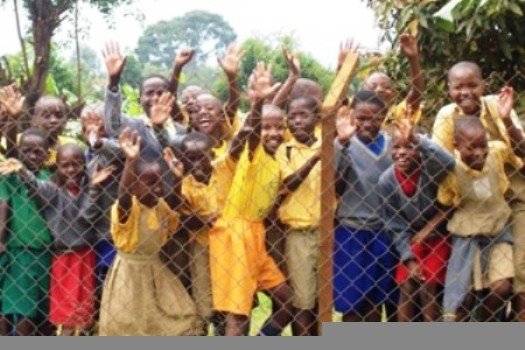
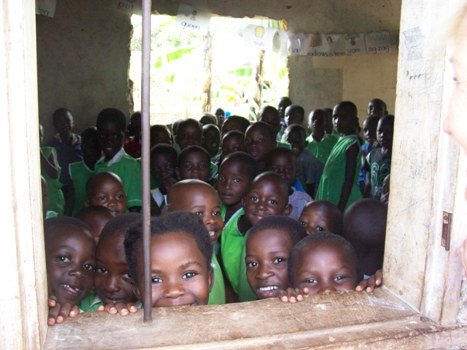
Children at an orphanage in Entebbe, Uganda. There are so many children here it is incredible; there are orphans everywhere. The people take them in and it is not unusual to see families struggling with 8-10 children. We talked to a woman yesterday who has taken in twelve children. She said, "sometimes I feel sad that I cannot do more, but everything must have a beginning". We have decided to use that as our personal reminder to guide our actions here as we try to help.