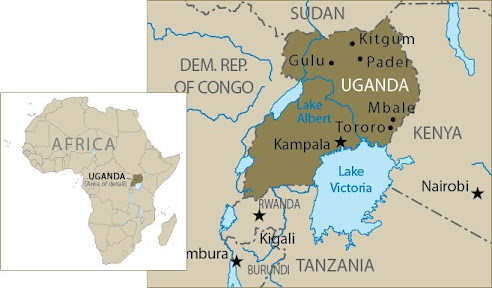
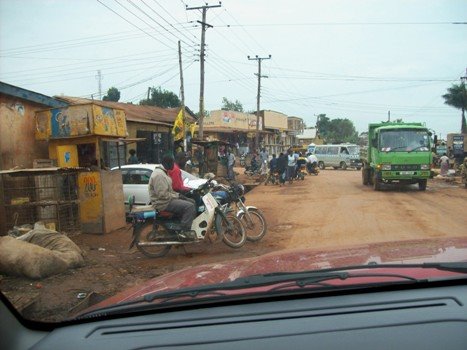
Map of Uganda

Map of Uganda
The Uganda Kampala Mission includes Uganda, Ethiopia, Rwanda, Burundi and Southern Sudan. Our assignment covers all the areas except Ethiopia.

Wednesday, January 27, 2010

Experience with the Mountain Gorillas


We could almost hear chants of, “Kong! Kong! Kong!” as we approached the rugged peaks of the Sabyinyo volcano in Volcano National Park in Rwanda. We were there to go gorilla trekking. The park only allows 16 people a day to go with the guides; two groups of 8. We were with Elder and Sister Robinson, short term water specialists from the United States. Our main purpose for being in Rwanda was to look at sites for future water projects in the country; trekking was a side trip for us. We met up with our guide and four other trekkers from Austria and headed out at 7:00 A.M.


The gorilla groups are dispersed on the steep, thick forest of the volcanic mountain. We were at 8,000 feet elevation so the weather was fairly cool and comfortable for the strenuous climb up the slopes.

We were going to meet up with the Sabyinyo Group of nine gorillas. This group includes one Silverback, 4 adult females, 1 young female, 2 juveniles and a baby. We were excited to track this group because the Silverback, Guhonda, weighing 520 lbs.,is the largest mountain gorilla ever recorded.

Three trackers go out very early in the morning to locate the gorillas so the guides can intersect their trail. They do not move very far in one day so they can usually be located.

The first gorilla we encountered was the big Silverback, Guhonda. We followed him for about 15 minutes through the thick jungle until we found him lying in a small clearing in the forest.


His size was truly impressive and he seemed unconcerned about our presence.

The next gorilla to show up was the baby, followed closely by the rest of the family.

They emerged very quietly from the thick forest and just suddenly appeared around us.

Guhonda took up his “guard” position where he remained the whole hour we were with the group.

He watched us very closely but did not move from his position the whole time we were there.

We were able to get close to the gorillas while they played and interacted around us. The two guides kept them at a distance by making gorilla noises; “talking” to them. Since the gorillas can contact diseases from humans, they don’t want them to come any closer than 15-20 feet.


We watched the baby alternate between nursing, wrestling with the younger gorillas and putting on a show for us by swinging on the vines in the trees.

The hour with the gorillas passed quickly as we watched them move around us.

As we started the hike down, the sky got very dark and it rained heavily the whole way down. We were grateful that we were not on the way up at the time as the ground got very wet and muddy.

There are only about 700 mountain gorillas left in the world; all in Uganda, Rwanda or the DR Congo. It was an amazing experience being among them….one we will never forget.

Wednesday, December 30, 2009

Orphanage Christmas Party

Early in December we were told that there were 150 students at The New Hope for Africa Orphanage in Seta who had nowhere to go for the Christmas break. We previously did a project at the orphanage and Elder Holland of the Quorum of the Twelve visited them while he was here in Uganda. So the senior missionary couples, along with President and Sister Christensen and some of our friends from the Mengo Branch, decided to prepare a dinner, gifts and a party for them.


We arrived early in the morning to begin preparing the food. All the cooking is done on this wood burning stove.


Everyone was pressed into service to help with food preparation. Art and Joseph hard at work on the carrots.


The main staple food in Uganda is matoke, which is made from a type of green banana, cooked in banana leaves.


It is not really the favorite food of the children but no meal is considered a "feast" without it. Our friend Olivia is a great cook and dishes up the matoke when it is cooked.


Some of our other friends from the Mengo Branch: Harriet,Tina,Olivia, President Sylvester Mugishu and Kezia


We also prepared beef, potatoes, chicken, beans, cabbage and cake.


The kids rarely even see a large piece of cake much less get several pieces. It was easily the favorite food group. Usually when they "cut" a cake here, everyone gets a piece about the size of a quarter. Four little girls waited for us to cut up one piece for them to share. They could not believe that they each got their own piece and just stood staring at their plate and smiling for about 30 seconds befor digging in.


Everyone enjoyed the meal, especially the rare chance to get seconds.


There was even enough for some of the children from nearby houses.


We took some jump ropes and soccer balls to leave for the children to use. They had great fun playing while we were preparing the meal. Two of Elder and Sister Beachley's children were visiting from America and helped with the kids for the day.


The older kids put on a great show for us with authentic drumming and dancing.


Many of the older orphans were displaced as a result of the war in the North with the LRA. The country-wide dance program was designed to help them forget the trauma of their early years. They have a lot of fun when they perform.


After the show, we handed out a school bag with some Christmas goodies, toys and school supplies sent from our friends in the U.S.


We got to enjoy the day with some "substitute grand kids".


A good deal for everyone! A BIG Thanks to all our friends back home who made this day possible.

Tuesday, November 24, 2009

WE GET BY WITH A LITTLE HELP FROM OUR FRIENDS…

Actually, a lot of help from our friends and relatives. Many of them in the U.S. send us supplies like reading glasses, children’s books, candy, pinewood cars, dolls, etc. You can’t imagine how much joy these small things bring to the kids here. Many of them have never had a toy as we think of them. Recently we got a package which included some balloons. So, we decided to buy the ingredients for ice cream floats and have a party with the kids at a nearby school, during their break.

We had made some hand puppets on one of our projects to teach hygiene in schools, so we started with some stories (complete with puppet accompaniment). The kids had a great time reading the stories.

Next,it was time to hand out the balloons.


It did not take long for the excitement to start. The contest was on to see whose would fly the highest.

Then it was time to get down to the serious business of ice cream floats.

Life doesn’t get much better than this.

The next day we went to a school where we are starting a new project. It is not as fortunate as the first. The school is deep in the forest of the Nakaseke District about 30 miles from Kampala. The villagers have built a mud brick classroom which is falling down.

Their latrine is also mud brick, full and beginning to collapse. The village had purchased supplies to build a new latrine. We are not allowed to construct classroom buildings…but we can build latrines (complete with a 45 foot deep pit).

So, we built a six stance latrine and they will use their supplies to build a new classroom building. Then, we will install a rainwater catchment system with a 10,000 liter tank.

This is what the almost finished latrine looks like…

Complete with a new design we are trying out for a hand washing station.

When all the work is finished, we will take the ice cream float-balloon-puppet party here also. A heart-felt thanks to all of our friends for your contributions. They have brought a smile to many a face!

Tuesday, November 3, 2009

A TYPICAL WEEK IN OUR MISSION...


We are involved a lot with our new project to build protective structures at natural springs. This time of the year is the long rainy season. Most of our springs are in remote villages about 50 kilometers outside Kampala. The roads to the sites are beautiful with flowering trees. They can also be exciting. Sometimes we have been close to vertical, but Art has done a good job of staying on the road… so far!

This part of Uganda is lush and green with dense forest.

This site is in the forest away from any village center and will serve about 300 people

We were asked by a village to protect this spring because a large Python is coming out of the forest into the spring at night and making the water muddy. They are afraid that it will get one of the children when they go for water….a reminder that we are actually in Africa!

This is the structure being built at “Python Spring”.

The water is now protected and much cleaner. The villagers have hired two Congolese snake hunters to catch and remove the Python from the forest. The villagers say it is 15-20 feet long and we have offered to pay for a picture when they find it. That will make a great blog photo!

This is one of the larger spring structures we have under construction. It will have four pipes and a flow of about 100 liters/minute. The average flow from a borehole well is about 12 liters/minute. When electricity eventually comes to this area, a flow this large can be pumped to the entire village.

On another day we visited a school for the blind near the headwaters of the Nile River. They are in need of Braille machines and paper.

We also toured a facility in Jinja that manufactures Trike style hand-crank wheelchairs. We are hoping to get approval from Salt Lake to order some of these before the end of the year. If we can have them made locally, it will save us the cost of having them shipped here from the U.S.

Elaine served as “test pilot” for one of the Trikes. However, despite her protest, she was not allowed onto the open road.

As part of the Spring Project, we are building a latrine and installing a rain water catchment system at thirty two schools in the out- lying villages.

Elaine was surrounded by some of the 800 children at this school. Three hundred of the children board at the school also. We are always amazed at the number of children in Uganda.

Art performed his usual duty as group photographer. With this many kids, it is impossible to take an empty photo of the school buildings.

This is what the finished product looks like…not something Frank Lloyd Wright would build, but functional.

On the drive back to Kampala Friday afternoon we got to follow this truck, headed for market, over-loaded with sacks of charcoal. Because it was raining heavily the truck did not have the usual supply of ten guys riding on top of the sacks. We are always amazed that these trucks ever manage to make it to town.

Another adventurous week gone by….and we love it!

Tuesday, October 27, 2009

LRA attacks Darfuri refugee camp in Southern Sudan


Sun, 25 Oct 2009 03:08:59 GMT
Font size :

The LRA is one of the world's most brutal guerrilla movements.
Ugandan rebels of the Lord's Resistance Army have attacked a camp for Darfur displaced persons in south Sudan, killing at least five people and wounding several others.

A Sudanese army spokesman confirmed on Saturday that the attack happened in Western Bahr al-Ghazal state, which has a long border with Darfur.

"The attack happened on the 21st (of October) ... targeting the displaced people from Darfur in a camp," the Reuters news agency quoted Kuol Diem Kuol as saying.

Military sources said three police guarding the camp and two Darfuris were killed in the attack.

The attackers from the Lord's Resistance Army (LRA) also abducted a number of people in the region during the ambush.

The LRA rebels, in desperate need of supplies, often raid southern Sudanese border villages.

The LRA became active in northern Uganda in 1988 and is categorized as one of the most brutal guerrilla movements in the world.

It is currently engaged in an armed rebellion against Uganda, the Democratic Republic of Congo, and some other African governments in what is now one of Africa's longest-running conflicts.

The movement, led by its ruthless leader Joseph Kony, is spread out in Congo, south Sudan, and the Central African Republic.

Wednesday, October 21, 2009

CHILDREN SINGING...another school to help.


The Lakeside Preparatory School, Mbiru is located in a poor fishing village on the banks of Lake Victoria. This is one of the most needy areas in the country. We are going to repair the roof of the building and install a rain water catchment system.

We will also build a new latrine structure for the school. Currently 320 students use this one latrine with outdoor urinals.

The children sang for us when we met there to discuss their project

Saturday, October 10, 2009

REFUGEE PROJECT IN RWANDA


The day we went to the Gihembe Refugee Camp it was raining and cold, especially by African standards. The camp is high in the hills of Rwanda 60 km. from Kigali. It was 55 degrees and the sky was dark with low hanging rain clouds. The camp was established in 1997 to host Congolese refugees fleeing the fighting between rebel groups and the government. Twelve years later, continued and renewed fighting has sent a new wave of refugees to the camp. There are 4,000 mud houses holding more than 19,000 refugees of which 11.000 are children. On days of heavy rains, walls of some of the houses collapse or are carried away by mud slides.


Today, the children huddle beside the buildings or under blankets for warmth.


The Church, through Deseret International Charities, has partnered with the United Nations High Commission for Refugees and sent 10 containers of supplies totaling 180 tons of clothing, wheelchairs,blankets, shoes, hygiene, school and newborn kits. We were there to begin the distribution of the supplies. They were sorely needed, especially by the children. The hygiene kits were desperately needed. In the camp every pit latrine is shared by 27 people and proper hygiene is a major concern.


The warm clothing, blankets and shoes were especially needed and appreciated. One item slightly out of place was a lime green toilet seat cover...in a camp with no toilets. However, one young boy made an excellent winter hat out of it.


This baby, born the day before our arrival, will receive a new blanket and one of the new born kits.


These children posed for us in their newly acquired clothing. As we were leaving, the rain stopped and the sun came out briefly. We hoped that it signified a brighter day ahead for the residents of Gihembe. As we left, more UNHCR trucks were coming into the camp with additional supplies from the containers.

Monday, September 28, 2009

In Memoriam...Theresa Nandi Busulwa 1998-2009


The Death of a child in Uganda...

A phone call at 2:00 A.M brought stark African reality..."My beautiful, healthy daughter is dead..." We will never forget the pain and anguish in our friend Ssimbwa’s voice. His 11 year old daughter, “Teddy” had been in the hospital for three days being treated for an asthma attack. That day she had been improving; only being put on the nebulizer every six hours...now she was gone. It was a great sorrow, not managed by a few words or kind acts. What could we do?..."some few things...100 lbs of maize flour, beans, rice, sugar"- things to feed the gathering friends and family... visit the family...hug...shake hands... express sorrow and watch the surge of church members, family and friends swell ...everyone understanding (25% of African children die before the age of five). As we left, those who had gathered began to sing hymns and talk in hushed tones. They stayed all night with the family.

Ssimbwa called early and said..."Sister, will you bring some small wreath to put on my little girl’s grave?". When we arrived we had bottled water for about 500 people, and Eddie in the truck...he could speak to the two Grandmothers with us during the two hour ride to the village.


Rains have come to Uganda...it is so green and gardens are growing at an incredible rate...The drive to his village was one of the most beautiful areas in Uganda. In the family compound there were about 200 chairs set up under shade; not nearly enough for those who would to come. Teddy was taken into the house by her father and other family members. The simple wooden coffin was placed on the floor and surrounded by sitting mats. The women sat and cried and wailed their grief. Expressing sorrow here is done openly and without restraint.


Teddy's sisters.


Following the service the congregation moved, singing, to the small grave among the ancestors who went before her. Also there, were the graves of the family's two other children who preceded her.

...this is life and passing in Africa.

Sunday, September 13, 2009

Rioting in Uganda


There has been widespread civil unrest for the last two days in Kampala and the surrounding towns. Supporters of the Buganda Kingdom Kabaka (King) have been battling police and army troops in protest against the government. The trouble started over the Kabaka being denied access to a youth rally in the town of Kayunga, north of Kampala. As a result, frustration with the government has flowed into the streets of Kampala. We were going to the Branch in Mengo this morning but ran into an onslaught of people running in the other direction with their hands in the air and boda-bodas motioning for us to go the other way. There was a smoke cloud and tear gas in the street ahead so we returned home. All missionaries have been told to stay inside the last two days but it appeared this morning that the protests were over; obviously they aren't. So, we are back inside doing paperwork.

We are in no danger in our compound because the riots are in the center of the city where roads in and out of Kampala have been blocked by fires and demonstrators. We are hopeful that the situation resolves quickly as we just started our new natural spring protection project this week. It will provide clean water to 70,000 people. In addition, a shipment of our wheelchairs is at the Kenyan border waiting to come into Kampala where they will be flown by the UN from Entebbe to Sudan.

Saturday, September 5, 2009

Latest Refugee News


This is an article from the September 2009 Ensign Magazine which we wrote about the missionaries helping us put together emergency kits with some of the supplies from the refugee camp project. We think it is definitely Pulitzer Prize winning material. Obviously, we did not put our names in the article due to our extreme humility... or else the editor took it out....I can't remember which. Because of cholera outbreaks in the camps at Nakivale and Kanungu, families with small children sometimes bypassed the camps and came to Kampala seeking help. The kits would provide them short term assistance until they could be relocated. It would also provide an emergency back-up supply for the Minister of State over Refugees.

We thought that putting these kits together would be an all day task. We obviously underestimated the Elder and Sister Missionaries. They had all the kits assembled and boxed in less than an hour and had a great time doing it.

We were really impressed by how they all worked together. We told them what needed to be done and just stood back and watched. They organized themselves into groups with different tasks and started.


There were a lot of good natured jokes about, "How many missionaries does it take to fill a bag of rice?"

By the time Art got back from the store, with ice cream and drinks to make floats, the project was finished. Just a coincidence, we are sure.

The kits contained cooking oil, a pot, 2 cups, a blanket, flour, rice, salt,sugar, soap and mosquito nets. The kit provided a week's supply of food for a family of four.

A few days after we assembled the kits there was a new outbreak of cholera in Nakivale. This brought another influx of refugees to Kampala. Within two weeks all the kits had been given to needy families.


NEXT ON THE AGENDA....
We will be going back to Rwanda on September 18th for 6 days to distribute supplies in the Congolese refugee camps. There are more than 150,000 refugees in 3 camps and 2 receiving centers in Rwanda. The Church is sending 10 containers of supplies which we will coordinate with the United Nations High Commission for Refugees. The containers are now en route to Kigali from the port at Dar es Salaam in Tanzania.

Monday, August 3, 2009

EMERGENCY FAMINE RELIEF PROJECT TO NORTHERN UGANDA

We just returned from our second Famine Relief Project to the Teso region of Northeast Uganda. There has been a widespread drought in the country this year and five of the Districts in the North have been declared to be in a state of famine. In early May we took a shipment of hoes and cowpeas for planting, following a series of severe hailstorms which destroyed crops and killed animals. This time, we went further east, to the villages bordering the Karamoja Districts. The World Food Program is in Karamoja but it is not considered safe for other organizations. Some of the food shortages are caused by the Karamojong raiding the surrounding Districts. This was the fifth Emergency Response project we have done with Musa Ecweru, Uganda’s Minister of State for Disaster, Emergency Response and Refugees.


The “road” to the villages of Okude and Otubet had some interesting twists and turns.

The directions to the village could have included instructions like, “drive through the grass to the third hut, go between the drying rack and cassava and turn right behind the mango tree”. Following Minister Ecweru’s trusty driver, Job we were able to find our destinations.


We went to isolated villages where the World Food Program and Red Cross did not go. These were villages that were over-run by Joseph Kony’s Lord’s Resistance Army in 1994. It was Ecweru who commanded the army which drove them out of Uganda. He is quite the local hero. Women were waiting 1/4 mile from their village with long scarves waving and trilling when we came. He got out of his truck and was hugged and cheered by the women. When we got out of our truck, we were engulfed by scarves, hugs and many old women for traditional greetings. We felt VERY welcome. The people like to tell about the war; pointing out places where battles were fought and villagers or rebels were killed.


Between the District center and the two villages, there were a total of 7,000 people. With Minister Ecweru, we distributed 2,000 hoes, 2,200 lbs. of powdered milk, 3,700 lbs. of maize flour, 3,300 lbs. of beans, 4,000 lbs. of cowpeas, 500 bags of potato vines and soap.


There were many children in the villages as usual. Because of their condition, they were not as outgoing and friendly as usual. In addition, we were in a very remote area where they were not used to seeing “Muzungus”.

These kids have been through some really hard times. However, Elaine soon got at least some of them smiling and counting.

In areas like this we are trying to promote sack gardening as a back-up food supply to gardens. This small sack garden contains 18 cabbages and 2 tomato plants. It can be done in a very small area; even in a house in town.

As we were leaving the village of Otubet, this man wanted me to take his “portrait”.


On the way back to Soroti we stopped at this field where some of the cowpeas and cassava we distributed in May had been planted. In spite of the drought, a very nice crop had been grown. Both of these crops grow quickly and are very drought resistant. In the areas where these crops had been planted the people were in much better condition and were strong enough to work in the gardens.

The government has encouraged the building of family granaries. If there is a good harvest, storing food can prevent a repeat of the same cycle next year.

The timing of this trip could not have been better. It rained the 2 days before we arrived and there was a massive rainstorm the last night we were there. Hopefully the food we took will supply the energy needed to get the crops planted in order to take advantage of the moisture. Late August and September are the “rains” in Uganda and we are keeping our fingers crossed for a favorable weather pattern this year.

Hopefully, better days are ahead.

Sunday, July 19, 2009

A NEW PROJECT IN ENTEBBE ???


On the banks of beautiful Lake Victoria there are many poor fishing villages. In one such village we found the Lakeside Preparatory School. Like hundreds of other schools we have seen here it has many more needs than we could possibly meet. What we saw there are scenes that are repeated all over Uganda, every day. The conditions at this school are worse than some; better than others.


We are going to try to put a rain water catchment system on the school but will have to slope the roof to one side first.


There are 458 children in the school and 3 teachers. This classroom holds 80 children and the firewood supply for cooking.


Elaine always spends time letting the kids practice their counting in English.


Art gets to just play around with the kids during lunch time.


For lunch, each child has to bring a cup of maize flour from home so porridge can be made.


Those who don’t have flour don’t get porridge and have to find sugar cane or a mango to eat, from the nearby forest.


One of the big needs here with growing children is shoes. Most of the children are bare footed all of the time. This is a school where many cannot afford the uniforms. We are trying to get permission to seal dirt floors with a thin plaster coating to prevent diseases and parasites.


Some of our good friends from the U.S. have sent children’s books, which are received with joy at the schools. Books of any kind are a novelty in schools here. Most of the teaching is done by repeating back, in unison, what the teacher has said. They lack any writing materials.


In spite of circumstances as we see them, the children are always happy and friendly and like to lead us around by the hands.


For the 458 children there are 2 pit latrines and 2 open air urinals. These pose a serious health hazard and we are going to try to get approval to build new concrete latrines at this school.


The school’s “kitchen” also needs some work. We have plans for an adobe brick stove which we can build that uses very little wood and vents the smoke outside.


As we left, we were struck by the contrast of the forest just beside the school. There is much to be done here…

Monday, July 13, 2009

LATEST CRISIS IN UGANDA...

The following article appeared in yesterday's newspapers. Soroti and Amuria are where we took tools and seeds for planting in May. Unfortunately, it has not rained there since then. We are meeting with Cabinet Ministers tomorrow to see what we can do. The Emergency container we had ordered for the refugee camp just arrived here Friday but contains no food items. We will have to see what tomorrow brings...

Two million people at risk of starvation in Uganda

THE NEW VISION | BUKEDDE | ORUMURI | RUPINY | ETOP | SUNDAY VISION | BUKEDDE KU SSANDE

Saturday, 11th July, 2009

BY HERBERT SSEMPOGO


OVER two million people in North, Eastern and West Nile are at risk of starvation, the Uganda Red Cross has announced.

The agency yesterday stated that Kitgum, Katakwi, Bukedea, Kumi, Soroti, Amuria, Koboko, Adjumani, Nebbi, Arua and parts of Kibaale are the worst hit areas.

Michael Nataka, the Uganda Red Cross secretary general, yesterday attributed the famine to prolonged draught, out of season planting, the ripple effect of the 2007 floods that ravaged Eastern Uganda and changes in weather patterns. The statement follows an evaluation tour of the affected areas.

“In some areas where farmers planted early, the crops were thriving. But you find in the same village crops are withering in other gardens because people planted late,” Nataka stated.

“The region has never recovered from the flooding, which affected the cycle of storing seeds. There is also lack of adequate information about the weather. People are relying on seasons that have since changed.”

Children, elderly, sick and the children-headed households are the worst hit individuals, according to Nataka.

The Red Cross, however, noted that all of the deaths recorded in the affected areas were not as a direct result of hunger. For example, in Adwari, Lira district six people who succumbed to HIV/AIDS and another four who died of old age had been attributed to hunger.

Accordingly, the agency has launched an emergency appeal for sh5.6bn to feed 50,000 people. The Red Cross plans to raise 3030 metric tons of food to provide relief in the hunger-stricken areas. Well-wishers may deposit monies on Standard Chartered Bank account number 0108213406906 while others may contribute food in kind.

URCS, he added, had provided its store in Ntinda, a city suburb where the donations in kind would be stored before dispatch. Deputy Secretary General, Dr. Bildard Baguma said that they would first focus on the worst hit areas before rolling out to other areas.

HEADLINES
NBS The Web


Politicians start games about the hunger in Teso region.

The saga surrounding the supply of food to hunger victims in Teso sub-region has taken a new twist. Politicians are now sounding drums of verbal exchanges over their own failure to address the situation.

Sunday, June 28, 2009

HEALTH INITIATIVES IN RWANDA AND UGANDA

We have just completed the process of organizing the Neo-natal resuscitation project which will take place in Rwanda in January 2010. Dr.Petty, an anesthesiologist, and his wife came from Cedar City, Utah to get things organized. For short-term specialist in their 70s, they were a couple of fireballs. There were a number of obstacles to overcome when we first went to Rwanda. We visited the office of the UNHCR in Kigali and found that the woman in charge had previously worked on a NRT program in Angola with the Pettys. She spent some time making phone calls to friends in the government and by noon all of the necessary doors had been opened for meetings with the Minister of Health, the U.S. Embassy,USAID and the necessary hospitals.


Art and Dr. Petty meeting, at the University Hospital in Kigali, with the Chief of Obstetrics and the hospital's pediatrician.

We found this though provoking poster in the office of the United Nations High Commission for Refugees. It was especially meaningful to us after our experiences in Southern Sudan and the refugee camps in Uganda.

Elaine with the Chief of Nursing for the Ministry of Health and one of the Head Instructors for the School of Nursing in Kigali.

There are many reminders in Rwanda of the 1994 genocide. This is the Parliament building in Kigali where the last battle was fought at the end of the genocide. Note the bullet marks around the top walls of the building.

While we were there, we also made arrangements with the UNHCR to go with them in September to the refugee camps in Rwanda to help distribute the shipment of 11 relief containers the Church is sending from Salt Lake City. There are currently 53,000 refugees from the DR Congo in three camps in Rwanda.

COUNTRY WIDE VACCINATION PROGRAM IN UGANDA

When we returned to Uganda the Church participated with the World Health Organization in a measles and polio inoculation program which vaccinated 5.5 million children, below the age of five, throughout the country. Members acted as volunteers at some of the 1500 vaccination posts (including those under trees).

The full time missionaries helped cheer up the kids and got to practice their Lugandan language skills.

Elaine, of course, brought her usual supply of balloons and candy.

There are many misconceptions and superstitions in Uganda about vaccinations. Sometimes the volunteers had to go house to house encouraging the parents to bring the children for shots.

Here a member of our Branch in Mengo comforts a little girl after "the big event".


We went to check on one of the orphanages to see if they had received the vaccinations and ran into a girl's soccer team from Provo, Utah. They were in Uganda teaching girls to play soccer. Here it is exclusively a boy's sport.It was quite a surprise meeting them. They were travelling around Uganda for two weeks doing clinics.

By the end of the four day drive, 520 of the members of the Church in Kampala and Jinja donated a total of 7,150 hours at the schools and vaccination stations. We had an interesting experience with the 27 members of our Mengo Branch who worked a total of 970 hours. On the first day, the Red Cross van took them 6 miles out to various stations in a very depressed area of the city and left them with the promise that they would be back. Unfortunately, they did not go back to pick them up after dark. None of them had the 50 cents necessary to ride a Boda-Boda home. They did have cell phones, so they met up and walked the 6 miles home, arriving at 10:30 P.M. The next day at church they told us that they had been "disappointed" by the way they were left by the Red Cross but that what they were doing was important for the children. That afternoon and the next day they all went back to the same area to continue working. We gave them money for transport in case they were left again. The Ugandans are kind-hearted people who share with others regardless of how little they have themselves. We are always touched by their kindness.

Sunday, June 21, 2009

Ribbon Cutting Ceremony....almost!

The villagers are all gathered for the ribbon cutting ceremony to lauch the pineapple project, the cameras are rolling, the scissors are sharpened....razor sharp! As they say; the rest is history. At least we didn't have to listen to long boring speeches. (It takes a minute to load)

Thursday, June 11, 2009

Humanitarian Projects in Rwanda

We will be in Rwanda again next week for six days to help get details worked out for the neo-natal resuscitation training program that the Church will conduct in November. Physicians and nurses from the United States will come to conduct training classes for the medical personnel in Rwanda. In all, 200 physicians, nurses and nurse midwives will receive the training. During this trip we will meet with Rwanda’s Minister of Health and other government officials to solicit their approval and support for the program.

While there, we will visit the refugee camp where there are 53,000 refugees from the war in the DR Congo. The Church is sending 10 containers of emergency supplies which should arrive in the next 30 days. We will go back then to assist with the distribution. This trip we are there to just assess logistics and the areas of greatest need.

Sunday, May 31, 2009

COMPLETION OF PINEAPPLE PROJECT

We have been working with a man named John Galiwango on this project for several months. The Church is funding the start-up of a pineapple plantation in the remote rural village of Kigayaza, near Mukono, Uganda. This is an area where most of the people are subsistence farmers with little actual income. The village had a 3.5 acre tract of community land which they cleared and cultivated. We supplied the machetes, hoes and fencing materials to clear the land and spray for weed and insects. When it was ready for planting, we purchased 30,000 pineapple suckers and 250 banana suckers. The project will be used to train the villagers in planting methods, crop management and pest control. As the pineapple plants grow, some of the suckers will be removed and given to other villagers to start their own smaller crops. The banana plants will mature faster and provide an additional cash crop. It will take the pineapples 18 months to be ready to harvest. The banana and pineapple crops will provide income for school fees and needed items for the villagers.


When we first visited the site the 3.5 acres was covered with dense forest. John told us that 30 men working together could clear the land with just machetes and hoes. When we asked how long that would take them he told us 3 weeks. We were slightly skeptical that it could be done that quickly.


When we returned 4 weeks later, this is what we found. The field had been cleared and the suckers planted. The people here can do an unbelievable amount of work with just a hoe. They are hard working and dedicated. There was still work to be done but we were certainly impressed by what they had accomplished in so short a period of time.


We provided some wheelbarrows to help with the field preparation. Coffee husks are spread to fertilize and keep down weeds. This is Ssimbwa, Elaine and John on the day we purchased the wheelbarrows. Elaine is providing the "nutritious" energy food for the workers.


Shortly, the field had all weeds removed and an additional maize crop planted to be harvested while the plants are growing. It will take 18 months for the pineapples to mature so the bananas and maize can be grown as cash crops during that time.


There is a shallow well pump near the field which can help with irrigation during the dry months. However, it sometimes goes dry before the rains start. We also supplied two 2,000 liter storage tanks which can be filled and saved for reserve water during this time.


While we “sweated” with installing the tanks, Elaine entertained John’s children. She obviously got the better part of that deal.


This is another project which John worked on previously in a different area. The pineapples are almost ready to harvest. We are sure this current project will do well and provide needed income for the people of the Kigayaza village.

Saturday, May 2, 2009

EMERGENCY AID TO NORTHERN UGANDA

The day we left Kampala headed for Northern Uganda with 2,400 hoes, 13,500 lbs. of cow peas and 330 sacks of cassava cuttings, the local paper had this headline: “Biting hunger has reduced Teso region to ghostland.” Northern Uganda, already suffering from the effects of a prolonged drought was heavily damaged by widespread hailstorms that destroyed crops, collapsed school buildings and huts, injured people and killed livestock. We were contacted by Musa Ecweru, Uganda’s Minister of State for Disaster, Emergency Relief and Refugees, requesting our help. We have worked with him before in the Congolese refugee camps in southern Uganda. He told us that people in Northern Uganda had been reduced to scavenging in the forest for leaves to eat. We contacted the Area office in Johannesburg, South Africa and within a week had approval to proceed and had arranged the supplies for transport. Cow peas are used here because within 3 weeks of planting there is a vine so that some of the leaves can be eaten. Three weeks later there are edible pods, followed by mature peas in another three weeks.

Our project assistant, Ssimbwa Busulwa had all of the needed items located and reserved by the time we got approval for the project.


Here he is with Minister of State Musa Ecweru during our planning session over lunch.

When we got to the villages we found that most of the remaining crops had been destroyed by the hail storms. Some of the fields had been cleared but there were not enough hoes to cultivate and no seeds for planting.


We were grateful for the speed at which the Church can operate where there is an emergency. Most of the other organizations were still in the process of conducting “baseline surveys.” Minister Ecweru called for all humanitarian organizations in Northern Uganda to cancel any seminars or workshops and “get to work helping”. He said, “We should not be holding meetings while people are starving.” The hoes and seed were much needed items. We also provided sacks of cassava cuttings, as cassava produces more crops per acre than any other crop in Uganda.

At each village that we had designated as a distribution point there were nearly 1,000 people anxiously waiting to receive the supplies. Here, Elaine commented about the strong and very calloused hands the women had from a life time of hard work. Minister Ecweru is a very dynamic speaker and tried to lighten the situation by using humor wherever we went. In 2004 he led the army which drove the LRA from this part of Uganda and is greatly loved and respected in the area.

Of course, there was the usual supply of beautiful babies to hold.


This school had been heavily damaged along with a medical clinic and numerous huts. The damage appeared more like a tornado than hail. The roofs had been blown off of many of the buildings and water tanks destroyed.

This building collapsed during school hours, killing one girl and seriously injuring six other students.

The UN loaned us trucks to help deliver the supplies to the four main distribution points and people gathered from the surrounding areas. The people would run through the fields to meet the trucks as they arrived.


We were impressed by the way people helped each other even though they were in a desperate situation themselves. This older lady arrived after all the seed had been given out at this distribution point. The young woman with the baby beside her was from a different village but she divided her seed and gave half to her to plant.

Although this man was very old and feeble, we found him a hoe and seed because he said he could get a young boy to plant his garden in return for borrowing the hoe to plant his own.

We saw many powerful examples of the honesty and integrity of Ugandans even in these dire circumstances. The women would work for an hour picking up every single seed which had been dropped so that they would have more for planting...


Yet, one of the 220 pound bags of seed fell off a truck and lay for two hours on the ground while seed was being handed out under the nearby tree. Although they could have easily done so, no one disturbed or broke open the bag until it was time for it to be distributed.

After everything was distributed and we were returning to town, we noticed that every mango tree we passed had people in it picking fruit. The Tamarind trees had all the leaves stripped off for food as high as you could reach. There were World Food Program trucks coming from town, with flour to meet the immediate need until the crops grow. It was starting to rain and we felt thankful for what the Church had been able to do.

When they ran a story on the evening news about the project, they referred to Art as “The owner of The Church of Jesus Christ of Latter-Day Saints”. We thought that was rather humorous.

Sunday, April 12, 2009

UGANDA PROJECTS UNDERWAY

We currently have twelve projects going in Uganda, Rwanda and Southern Sudan. So, we are getting quite a variety of experience here. As you will see, some of the “skills” we have acquired hopefully will never be used by us again…


We recently concluded a project to supply 100 piglets, maize seed and cassava cuttings for planting, and 250 blankets for needy children in the villages of Senyi, Degeya and Namiryango. We also provided building materials to construct a breeding center in the main village. Each family received a pig which they will raise and breed. They will then give one of the first female piglets born to another family until all of the 350 families have a pig.

Elaine’s skill as a “pig handler” was readily apparent to all at the hand-over ceremony. In fact, one of the reporter’s video of a “Muzungu” holding a pig made prime time news on the local T.V. station. These are villages where many of the orphans from the war in the North have been placed with widows and families. Some of the widows are raising 3-4 orphaned children. All of these were given a blanket.

They were all excited to receive their new possession. During the rainy season, nights here are very chilly since many children in the villages sleep on the ground.

We have another project in the community of Kagoma, which is a large village. The project is another livestock-sharing venture with a group of 90 women who are living with HIV/AIDS. Each woman receives a pregnant cow and then shares the calf, when it is delivered, with another woman. We supplied the initial 12 cows to start the process.


The women are divided in groups of 5 to care for the cow in the event that one is sick and cannot care for it. They all work together as they will receive the calves from this cow.

Like everywhere in Uganda, there are many children in the village. We are also supplying 300 blankets and mosquito nets for them.


In the Kamuli District we have a major water project underway. A total of 20 new boreholes will be drilled and 25 broken wells rehabilitated. This project has been going ever since we have been here. This was one of the first boreholes drilled. The boreholes are fenced by the villagers to keep out the animals. The limbs used for fencing then sprout to provide shade. Children spend many hours here collecting water.

The project also provided concrete latrine slabs so that people could build a structure and dig their own latrines. We toured the area to make sure this was being done. Since Art was the photographer, Elaine became the designated “latrine inspector”… a duty she will gladly relinquish when we leave.

You may notice that latrines in Africa lack something that is considered a basic essential in America...like a seat!

Part of the project is to provide a rain water harvesting system and tank for 16 schools. These systems can supply about 25% of the school’s water needs.

An interesting structure in the villages is their home made stove which is quite inventive. It is made from a mixture of cow manure and dirt from termite mounds. This mixture when it dries forms a substance like fire brick. The stoves are in a separate structure from the main hut. The flue for the stove vents outside and is constructed by using a large banana stalk which is plastered with the mixture. When it dries, the stalk is collapsed and pulled out, leaving the flue. The stoves use very little wood and are quite efficient. When they are being used, there is virtually no smoke in the cooking hut.

This is one of the “bathing huts” complete with soap holder.

As is the case everywhere, we found a collection of beautiful kids eager to have their picture taken.

Our next project takes us into the realm of “chicken ranching” but that is a different story so we’ll report on that venture later. For now, we’ll just be working on our chicken roping skills. Until then…

Sunday, March 29, 2009

TRIP TO RWANDA

We just returned from a week in Rwanda and western Uganda. We travelled with President and Sister Christensen on the ten hour drive from Kampala to Kigali,Rwanda.
We were in Rwanda to begin preparations for a Neonatal resuscitation program that the Church is going to do there. We also prepared for the ten containers of supplies that are on the way from Salt Lake City to the Congolese refugee camp in western Rwanda. It should arrive in the next month or so and we will assist with the distribution in the camp.


Rwanda is a beautiful country with rolling hills and mountains. People cultivate and plant crops everywhere by terracing the slopes.

The Branch of the Church in Kigali has grown from twelve members when it was organized last year last year to forty-five this year. We attended a First Year Anniversary party for the Branch on Saturday and nine new members were baptized in a beautiful lake outside Kigali.

There were two crested cranes outside our hotel window that spent all day pecking at their reflection in the window. They are the national bird of Uganda and are beautiful. However, they are obviously not very smart.

In many ways Rwanda is more developed and advanced than Uganda (especially the roads). However, the aftermath of the 1994 genocide is still evident, especially in Kigali. More than one million Tutsis were killed and some two million fled to refugee camps during the three month attack by the Hutu government forces which surrounded Kigali. We visited the genocide monument where three hundred thousand men, women and children are buried in a mass grave; it was a very sobering sight.


We did encounter several “obstacles” in our path during the return journey...


We stopped for two days in the Queen Elizabeth Park to go on a game drive. The guide kept telling us that we could not get out of the vehicle around the animals but we obviously did not listen to him. We did not want a bunch of long range generic photos so, in spite of his complaining, we got out to “pose” with the animals. You can't get good pictures from inside a vehicle.


Once, we did have a big bull elephant charge our SUV from about 25 yards away so we had to make a hasty retreat. It was a little hard to get this picture with the guide yelling frantically, "go, go, go" but we managed to do it anyway. When he finally calmed down, we told him, "see, we told you we were better off outside".


These hippos were in the river separating Uganda from the DR Congo. During the recent fighting, refugees crossed the river here, where it is narrow, to escape the fighting. They then travelled through the park to the refugee camp we visited earlier at Kanungu.


We will return to Rwanda soon for the refugee shipment. Now that we have finally seen lions and elephants we feel like we are really in Africa.

Sunday, March 15, 2009

THE CHILDREN OF UGANDA

Sometimes in Uganda it is easy to focus on living conditions and not understand and appreciate the quality of life.


Children here are happy bright and playful. Whether at church or bare-footed in the villages they find ways to enjoy themselves in everything they do.


We have found them to be quite inventive when it comes to toys. Don Allen, from our Ward in Salt Lake City, sent a box of tops which the kids love. This is "Mad Max" a little boy who lives next door to the church in Mengo. When we got here he was really wild but now he runs over to give us a hug anytime we drive up. He loves playing with the other children at family night. We love him even though he is still slightly "weird"!


Kids in the city make wire cars which they can steer with a wheel. Some of the cars can carry up to two pounds.

In the villages where there is no wire, they make them from sticks.

This boy in a refugee camp constructed this wooden scooter to haul water.

While there, we even found this aspiring musician.

Children here are taught early how to tend for the animals. We once found Ssimbwa's son in a tug-of-war with a goat...

Eventually the goat lost out!


Children work hard here to be able to go to school and are eager to learn.


Elaine spends some of our spare time giving "teaching hints"...and passing out candy where ever we go.

Kids tug at your heart strings no matter where you find them.

Saturday, February 28, 2009

NEW WATER PROJECT STARTED...

One of the problems with boreholes and springs in Uganda is they usually require people (mostly children) to walk long distances and wait for hours for their turn to get water. They do this every day and often miss some school time in the process.


As an alternative, we are starting a project in the Keyetume-Lufunve villages near Mukono. We met Sarah, a young Peace Corps volunteer there, who has a degree in water engineering. She has been assigned to the villages for two years and will be here until October. She has designed a plan for a gravity feed water system to supply the villages. The Church will fund the project in partnership with Keyetume Community Based Health Care. We hope that this project can serve as a model for other villages we will look at in coming months.


A protective structure has been built around the spring that will provide the water for the system. It serves as a run-off for the collection box so that the stream flow is never completely interrupted. From this point it continues to run down hill as a natural spring with the same flow as before.


A 40 cubic meter collection box has been built with a structure to house the submersible pump. The stream fills this whole system before flowing on to the protective structure.


The water will then be pumped 600 meters to the top of this hill overlooking the villages.


From there it will be gravity fed to taps in the villages, the medical clinic and three schools. This will supply easily accessible, potable water to approximately 2500 people in the area.


The project will save the villagers from having to hike up this steep trail from the spring carrying 42 lb. water cans. They will be able to draw water from taps near their homes freeing time for the children to do better in their studies.

Monday, February 9, 2009

TRIP TO SOUTHERN SUDAN..."strangers in a strange land"

We just returned from a seven day trip to Southern Sudan to begin our Humanitarian projects there. The Church is going to drill 10 new borehole wells, build latrines in the 10 villages and distribute 480 Rough Rider wheelchairs. Nothing we have ever experienced in life could have prepared us for the things we saw and heard there.


Christian Southern Sudan is truly a "war-torn" country whose infrastructure has been totally destroyed by a 46 year civil war with Islamic Northern Sudan; the longest civil war in history.


It is not possible to describe the condition of the people of Southern Sudan, especially the children. Time magazine called it the most dangerous place in the world for civilians in the 20th century. The war has left two million people dead, five million internally displaced and another half a million as refugees in other countries. An untold number have been abducted and sold in Northern Sudan as slaves.


Most of the children living there now have never farmed or raised animals in such a harsh place. It is our hope to get agricultural assistance/water and to teach them how to make a living, build safe houses, and protect themselves from disease.


Where we are going to drill the boreholes, there are entire villages that have been deserted because of lack of water. During the drought season the people move to the river banks to survive. During the rainy season which starts in April, flooding occurs. We were in villages about 50 miles south of the Darfur Region where residents of whole villages were either killed or abducted and taken to the North.


When we drill boreholes at these sites, the scattered people will gather together again in the villages where they will have a year round clean water supply. During January, 20 people in the village of Nyamlell alone died from cholera.


Two villages that we were in were Nyamlell and Marial Bai. When the peace agreement was signed in 2005 these are the places where children captured by the North were sold back to Humanitarian groups for $50-100 each. Two years ago, Save the Children left the area and turned 800 of these children over to adoptive families in the area. James Mayen, a former captive himself, and Ariel Joseph Deng opened a school to try to help them. They have no buildings, few teaching supplies (no chalkboards), and a few shade trees to protect the children from the sun.


I had to put this picture in to show that sometimes Humanitarian Missionaries don't have to wear ties! I considered that my reward for having to bathe in a bucket of cold gray water every day. By the end of the day, all my white shirts were this color anyway.


Two modern day heroes are James Mayen, a former abductee himself, shown here with President and Sister Christensen...


and Ariel Joseph Deng, another stalwart leader. These two great men will help us monitor our Humanitarian projects in Sudan.


Arek, a young albino girl, is one of the children who meet in the open classrooms of Nyamlell. She needs protection from the scorching sun. We had only our umbrella, sun glasses and chap stick to give her but we arranged for a Doctor to see her. We will check on her when we go back.


Everywhere in Southern Sudan there are signs of the war. Flying out, we saw evidence of the arial bombing of villages. On the ground, there are constant reminders of the years of conflict.


In 2011 Sudan will vote on the proposal to establish two seperate countries, where the line of demarcation will be and how the oil rich Darfur Region will be divided. Many are fearful that the war will erupt again then. When all is said and done all we can do is hope and pray that there will be a lasting peace for the sake of the children.

Sunday, January 18, 2009

BACK TO THE REFUGEE CAMPS..."DOWN BUT NOT OUT"


This week we spent 3 days in the Congolese refugee camp in Nakivale and the border transit center camp in Kanungu, Uganda. The camp in Kanungu is 3 miles from the DR Congo border, so refugees are processed there and then sent further inland to Nakivale for their safety.


The refugees have fled the war going on in the DR Congo between the Tutsi rebels and predominently Hutu Government forces. Most of the refugees in Kanungu are Hutus fleeing from the rebels who attack them while fighting the Army. The war in the Congo is basically a rekindling of the Tutsi-Hutu conflict from Rwanda. Even in the camps, the two tribes are separated. Many on the border move back and forth between their homes and the Kanungu camp as the fighting erupts. They build shelters like these out of stick frames,grass and tarpaulins until more permanent ones from mud brick can be built in Nakivale.


At any given time there are 10-20 "unaccompanied" children, ranging from 2-12 years old, in the camps. One of the Save the Children workers told us that when fighting breaks out, some of the families who have been there before will send their children to the camps for safety. They know the way and can travel the 3-4 miles on their own or following other families. Most of them are eventually reunited with the family. If not, they are sent on to Nakivale where they try to place them with a foster family. This little girl was alone in the camp.


When we first went to Nakivale in November there were 36,000 refugees there. This time there were 56,000 in Nakivale and 11,000 in Kanungu. While we were in Kanungu 8 busloads of people were being transferred to Nakivale. Just as before, the number of children is staggering. It seems like at least 70% of the refugees are children.


The Church allowed us again to purcase supplies locally while a container is being shipped from Salt Lake City. It should arrive in about 6 weeks and contains clothing, hygeine kits, newborn, medical supply, and school modules as well as some wheelchairs.On this trip we took with us another 1,000 blankets, 1350 cooking pots 2,000 lbs. of beans, machetes, hoes, shovels and wheelbarrows.


There is enough food in the camps now to last for two years. The people have been given land to raise crops and have already started clearing and planting. We took the tools to assist them in building shelters and farming. A second borehole was also being drilled in Nakivale. The hygeine kits that the Church is sending are a much needed item as there is still a major risk of water borne illnesses.


Elaine, again, became the "head, shoulders, knees and toes expert" in the camps. Even in their circumstances, the children enjoy fun and games with the "muzungus" (which means a white person in most African languages).


Art becomes "Uncle Muzungu" and the children are facinated by the hair on his arms. They can't resist rubbing it.


One of the tragedies of war in African countries is "Babies with babies" as young girls in the villages are raped by the rebels when they attack. This little 14 year old mom was alone in Nakivale with her 6 month old son. There are so many Moms with babies; we wish we had a polaroid camera and an unlimited supply of film so we could leave them a picture of their family.


We heard and saw some unbelievable things in the camps and again left with our hearts full of tears for these children. But, we know that tears are not what they need. Even in their circumstances now they are sweet and happy and full of life. At least they are safe now and there is hope for a better tomorrow.

Tuesday, December 30, 2008

A new lease on life...

One of the most rewarding responsibilities we have had in Uganda has been the delivery of wheelchairs. 750 wheelchairs were shipped from the LDS Humanitarian Center in Salt Lake City for the disabled in Uganda. In a handover ceremony in October, 700 were given to a Ugandan National organization for countrywide distribution. We retained 50 to be given to local church members and other needy people we locate. This is not a country where the disabled receive government assistance or public access. You often see disabled people crawling on public streets. Their knees and legs are calloused and dusty and they often wear sandals on their hands. We are able sometimes to just meet someone on the street or in a public place and give them a chair. Getting a wheelchair under these conditions is truly a life changing experience.

"Everything must have a beginning"

"Everything must have a beginning"
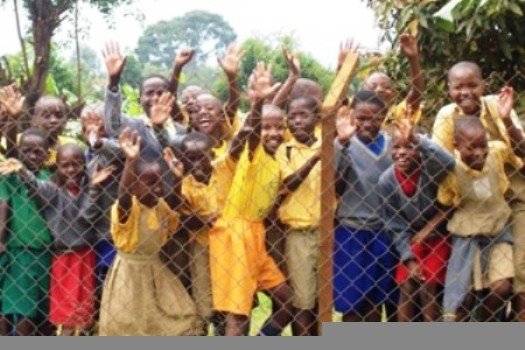
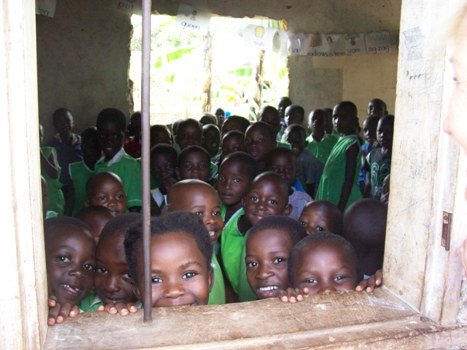
Children at an orphanage in Entebbe, Uganda. There are so many children here it is incredible; there are orphans everywhere. The people take them in and it is not unusual to see families struggling with 8-10 children. We talked to a woman yesterday who has taken in twelve children. She said, "sometimes I feel sad that I cannot do more, but everything must have a beginning". We have decided to use that as our personal reminder to guide our actions here as we try to help.