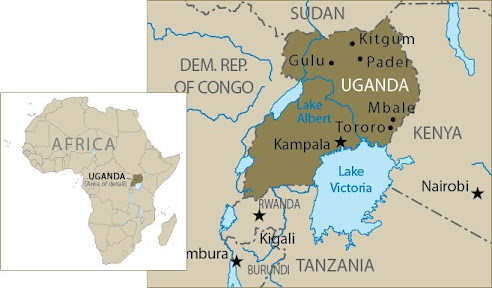
Map of Uganda

Map of Uganda
The Uganda Kampala Mission includes Uganda, Ethiopia, Rwanda, Burundi and Southern Sudan. Our assignment covers all the areas except Ethiopia.

Tuesday, October 27, 2009

LRA attacks Darfuri refugee camp in Southern Sudan


Sun, 25 Oct 2009 03:08:59 GMT
Font size :

The LRA is one of the world's most brutal guerrilla movements.
Ugandan rebels of the Lord's Resistance Army have attacked a camp for Darfur displaced persons in south Sudan, killing at least five people and wounding several others.

A Sudanese army spokesman confirmed on Saturday that the attack happened in Western Bahr al-Ghazal state, which has a long border with Darfur.

"The attack happened on the 21st (of October) ... targeting the displaced people from Darfur in a camp," the Reuters news agency quoted Kuol Diem Kuol as saying.

Military sources said three police guarding the camp and two Darfuris were killed in the attack.

The attackers from the Lord's Resistance Army (LRA) also abducted a number of people in the region during the ambush.

The LRA rebels, in desperate need of supplies, often raid southern Sudanese border villages.

The LRA became active in northern Uganda in 1988 and is categorized as one of the most brutal guerrilla movements in the world.

It is currently engaged in an armed rebellion against Uganda, the Democratic Republic of Congo, and some other African governments in what is now one of Africa's longest-running conflicts.

The movement, led by its ruthless leader Joseph Kony, is spread out in Congo, south Sudan, and the Central African Republic.

Wednesday, October 21, 2009

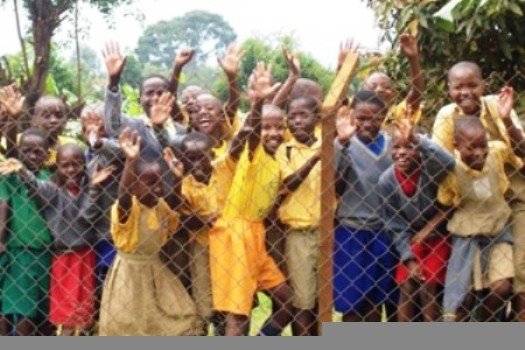
CHILDREN SINGING...another school to help.


The Lakeside Preparatory School, Mbiru is located in a poor fishing village on the banks of Lake Victoria. This is one of the most needy areas in the country. We are going to repair the roof of the building and install a rain water catchment system.

We will also build a new latrine structure for the school. Currently 320 students use this one latrine with outdoor urinals.

The children sang for us when we met there to discuss their project

Saturday, October 10, 2009

REFUGEE PROJECT IN RWANDA


The day we went to the Gihembe Refugee Camp it was raining and cold, especially by African standards. The camp is high in the hills of Rwanda 60 km. from Kigali. It was 55 degrees and the sky was dark with low hanging rain clouds. The camp was established in 1997 to host Congolese refugees fleeing the fighting between rebel groups and the government. Twelve years later, continued and renewed fighting has sent a new wave of refugees to the camp. There are 4,000 mud houses holding more than 19,000 refugees of which 11.000 are children. On days of heavy rains, walls of some of the houses collapse or are carried away by mud slides.


Today, the children huddle beside the buildings or under blankets for warmth.


The Church, through Deseret International Charities, has partnered with the United Nations High Commission for Refugees and sent 10 containers of supplies totaling 180 tons of clothing, wheelchairs,blankets, shoes, hygiene, school and newborn kits. We were there to begin the distribution of the supplies. They were sorely needed, especially by the children. The hygiene kits were desperately needed. In the camp every pit latrine is shared by 27 people and proper hygiene is a major concern.


The warm clothing, blankets and shoes were especially needed and appreciated. One item slightly out of place was a lime green toilet seat cover...in a camp with no toilets. However, one young boy made an excellent winter hat out of it.


This baby, born the day before our arrival, will receive a new blanket and one of the new born kits.


These children posed for us in their newly acquired clothing. As we were leaving, the rain stopped and the sun came out briefly. We hoped that it signified a brighter day ahead for the residents of Gihembe. As we left, more UNHCR trucks were coming into the camp with additional supplies from the containers.

Monday, September 28, 2009

In Memoriam...Theresa Nandi Busulwa 1998-2009


The Death of a child in Uganda...

A phone call at 2:00 A.M brought stark African reality..."My beautiful, healthy daughter is dead..." We will never forget the pain and anguish in our friend Ssimbwa’s voice. His 11 year old daughter, “Teddy” had been in the hospital for three days being treated for an asthma attack. That day she had been improving; only being put on the nebulizer every six hours...now she was gone. It was a great sorrow, not managed by a few words or kind acts. What could we do?..."some few things...100 lbs of maize flour, beans, rice, sugar"- things to feed the gathering friends and family... visit the family...hug...shake hands... express sorrow and watch the surge of church members, family and friends swell ...everyone understanding (25% of African children die before the age of five). As we left, those who had gathered began to sing hymns and talk in hushed tones. They stayed all night with the family.

Ssimbwa called early and said..."Sister, will you bring some small wreath to put on my little girl’s grave?". When we arrived we had bottled water for about 500 people, and Eddie in the truck...he could speak to the two Grandmothers with us during the two hour ride to the village.


Rains have come to Uganda...it is so green and gardens are growing at an incredible rate...The drive to his village was one of the most beautiful areas in Uganda. In the family compound there were about 200 chairs set up under shade; not nearly enough for those who would to come. Teddy was taken into the house by her father and other family members. The simple wooden coffin was placed on the floor and surrounded by sitting mats. The women sat and cried and wailed their grief. Expressing sorrow here is done openly and without restraint.


Teddy's sisters.


Following the service the congregation moved, singing, to the small grave among the ancestors who went before her. Also there, were the graves of the family's two other children who preceded her.

...this is life and passing in Africa.

Sunday, September 13, 2009

Rioting in Uganda


There has been widespread civil unrest for the last two days in Kampala and the surrounding towns. Supporters of the Buganda Kingdom Kabaka (King) have been battling police and army troops in protest against the government. The trouble started over the Kabaka being denied access to a youth rally in the town of Kayunga, north of Kampala. As a result, frustration with the government has flowed into the streets of Kampala. We were going to the Branch in Mengo this morning but ran into an onslaught of people running in the other direction with their hands in the air and boda-bodas motioning for us to go the other way. There was a smoke cloud and tear gas in the street ahead so we returned home. All missionaries have been told to stay inside the last two days but it appeared this morning that the protests were over; obviously they aren't. So, we are back inside doing paperwork.

We are in no danger in our compound because the riots are in the center of the city where roads in and out of Kampala have been blocked by fires and demonstrators. We are hopeful that the situation resolves quickly as we just started our new natural spring protection project this week. It will provide clean water to 70,000 people. In addition, a shipment of our wheelchairs is at the Kenyan border waiting to come into Kampala where they will be flown by the UN from Entebbe to Sudan.

Saturday, September 5, 2009

Latest Refugee News


This is an article from the September 2009 Ensign Magazine which we wrote about the missionaries helping us put together emergency kits with some of the supplies from the refugee camp project. We think it is definitely Pulitzer Prize winning material. Obviously, we did not put our names in the article due to our extreme humility... or else the editor took it out....I can't remember which. Because of cholera outbreaks in the camps at Nakivale and Kanungu, families with small children sometimes bypassed the camps and came to Kampala seeking help. The kits would provide them short term assistance until they could be relocated. It would also provide an emergency back-up supply for the Minister of State over Refugees.

We thought that putting these kits together would be an all day task. We obviously underestimated the Elder and Sister Missionaries. They had all the kits assembled and boxed in less than an hour and had a great time doing it.

We were really impressed by how they all worked together. We told them what needed to be done and just stood back and watched. They organized themselves into groups with different tasks and started.


There were a lot of good natured jokes about, "How many missionaries does it take to fill a bag of rice?"

By the time Art got back from the store, with ice cream and drinks to make floats, the project was finished. Just a coincidence, we are sure.

The kits contained cooking oil, a pot, 2 cups, a blanket, flour, rice, salt,sugar, soap and mosquito nets. The kit provided a week's supply of food for a family of four.

A few days after we assembled the kits there was a new outbreak of cholera in Nakivale. This brought another influx of refugees to Kampala. Within two weeks all the kits had been given to needy families.


NEXT ON THE AGENDA....
We will be going back to Rwanda on September 18th for 6 days to distribute supplies in the Congolese refugee camps. There are more than 150,000 refugees in 3 camps and 2 receiving centers in Rwanda. The Church is sending 10 containers of supplies which we will coordinate with the United Nations High Commission for Refugees. The containers are now en route to Kigali from the port at Dar es Salaam in Tanzania.

Monday, August 3, 2009

EMERGENCY FAMINE RELIEF PROJECT TO NORTHERN UGANDA

We just returned from our second Famine Relief Project to the Teso region of Northeast Uganda. There has been a widespread drought in the country this year and five of the Districts in the North have been declared to be in a state of famine. In early May we took a shipment of hoes and cowpeas for planting, following a series of severe hailstorms which destroyed crops and killed animals. This time, we went further east, to the villages bordering the Karamoja Districts. The World Food Program is in Karamoja but it is not considered safe for other organizations. Some of the food shortages are caused by the Karamojong raiding the surrounding Districts. This was the fifth Emergency Response project we have done with Musa Ecweru, Uganda’s Minister of State for Disaster, Emergency Response and Refugees.


The “road” to the villages of Okude and Otubet had some interesting twists and turns.

The directions to the village could have included instructions like, “drive through the grass to the third hut, go between the drying rack and cassava and turn right behind the mango tree”. Following Minister Ecweru’s trusty driver, Job we were able to find our destinations.


We went to isolated villages where the World Food Program and Red Cross did not go. These were villages that were over-run by Joseph Kony’s Lord’s Resistance Army in 1994. It was Ecweru who commanded the army which drove them out of Uganda. He is quite the local hero. Women were waiting 1/4 mile from their village with long scarves waving and trilling when we came. He got out of his truck and was hugged and cheered by the women. When we got out of our truck, we were engulfed by scarves, hugs and many old women for traditional greetings. We felt VERY welcome. The people like to tell about the war; pointing out places where battles were fought and villagers or rebels were killed.


Between the District center and the two villages, there were a total of 7,000 people. With Minister Ecweru, we distributed 2,000 hoes, 2,200 lbs. of powdered milk, 3,700 lbs. of maize flour, 3,300 lbs. of beans, 4,000 lbs. of cowpeas, 500 bags of potato vines and soap.


There were many children in the villages as usual. Because of their condition, they were not as outgoing and friendly as usual. In addition, we were in a very remote area where they were not used to seeing “Muzungus”.

These kids have been through some really hard times. However, Elaine soon got at least some of them smiling and counting.

In areas like this we are trying to promote sack gardening as a back-up food supply to gardens. This small sack garden contains 18 cabbages and 2 tomato plants. It can be done in a very small area; even in a house in town.

As we were leaving the village of Otubet, this man wanted me to take his “portrait”.


On the way back to Soroti we stopped at this field where some of the cowpeas and cassava we distributed in May had been planted. In spite of the drought, a very nice crop had been grown. Both of these crops grow quickly and are very drought resistant. In the areas where these crops had been planted the people were in much better condition and were strong enough to work in the gardens.

The government has encouraged the building of family granaries. If there is a good harvest, storing food can prevent a repeat of the same cycle next year.

The timing of this trip could not have been better. It rained the 2 days before we arrived and there was a massive rainstorm the last night we were there. Hopefully the food we took will supply the energy needed to get the crops planted in order to take advantage of the moisture. Late August and September are the “rains” in Uganda and we are keeping our fingers crossed for a favorable weather pattern this year.

Hopefully, better days are ahead.
Sunday, July 19, 2009

A NEW PROJECT IN ENTEBBE ???


On the banks of beautiful Lake Victoria there are many poor fishing villages. In one such village we found the Lakeside Preparatory School. Like hundreds of other schools we have seen here it has many more needs than we could possibly meet. What we saw there are scenes that are repeated all over Uganda, every day. The conditions at this school are worse than some; better than others.


We are going to try to put a rain water catchment system on the school but will have to slope the roof to one side first.


There are 458 children in the school and 3 teachers. This classroom holds 80 children and the firewood supply for cooking.


Elaine always spends time letting the kids practice their counting in English.


Art gets to just play around with the kids during lunch time.


For lunch, each child has to bring a cup of maize flour from home so porridge can be made.


Those who don’t have flour don’t get porridge and have to find sugar cane or a mango to eat, from the nearby forest.


One of the big needs here with growing children is shoes. Most of the children are bare footed all of the time. This is a school where many cannot afford the uniforms. We are trying to get permission to seal dirt floors with a thin plaster coating to prevent diseases and parasites.


Some of our good friends from the U.S. have sent children’s books, which are received with joy at the schools. Books of any kind are a novelty in schools here. Most of the teaching is done by repeating back, in unison, what the teacher has said. They lack any writing materials.


In spite of circumstances as we see them, the children are always happy and friendly and like to lead us around by the hands.


For the 458 children there are 2 pit latrines and 2 open air urinals. These pose a serious health hazard and we are going to try to get approval to build new concrete latrines at this school.


The school’s “kitchen” also needs some work. We have plans for an adobe brick stove which we can build that uses very little wood and vents the smoke outside.


As we left, we were struck by the contrast of the forest just beside the school. There is much to be done here…

"Everything must have a beginning"

"Everything must have a beginning"
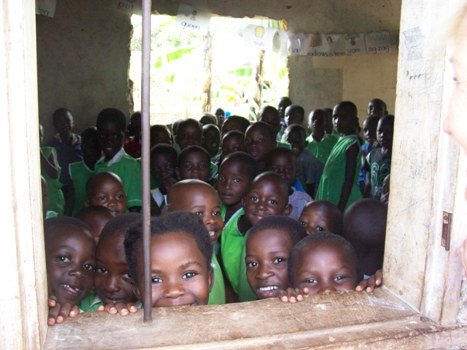
Children at an orphanage in Entebbe, Uganda. There are so many children here it is incredible; there are orphans everywhere. The people take them in and it is not unusual to see families struggling with 8-10 children. We talked to a woman yesterday who has taken in twelve children. She said, "sometimes I feel sad that I cannot do more, but everything must have a beginning". We have decided to use that as our personal reminder to guide our actions here as we try to help.